Eight quick checks before unpicking anything
Pause at the first place where the cloth begins to draw in. Compare it with the last section that lies flat, then check these common causes:
- The thread is being pulled tight instead of left relaxed after each group of stitches.
- The stitches are longer or more densely packed than the cloth can comfortably support.
- The needle is too thick for the fabric or thread pairing.
- The thread is too heavy for the weave and is dragging the surface together.
- The cloth is being held under tension or stretched while the needle is passing through.
- The patch or second layer has shifted and is pulling against the top cloth.
- The thread has twisted around itself and is shortening as it is drawn through.
- A marked corner or change of direction is being turned too tightly.
Relax the thread and the fabric
After loading a few stitches, draw the thread through without snapping it tight. Smooth the cloth with your hand and let the line settle before continuing. The aim is a thread that sits on the surface with enough ease for the fabric to move naturally.
Do not hoop or pin the cloth so tightly that it cannot be gathered onto the needle. Hold it securely, but allow the area around the stitch line to remain relaxed.
Change one material at a time
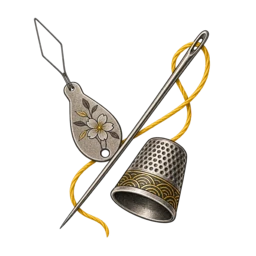
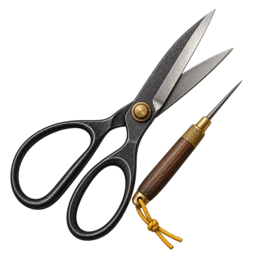
If the thread frays, catches or makes large holes, try a needle with a smoother or more suitable eye before changing the entire project. If the line still feels crowded, test a finer thread or a more stable cloth on a small sample.
A long needle can help load repeated stitches, while a shorter needle can feel easier around small motifs and turns. The right choice is the one that lets you keep the fabric flat without forcing the needle through.
Know when to correct the row
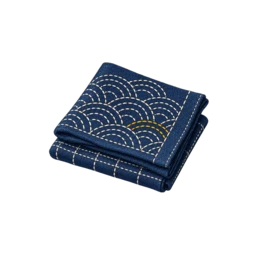
If the puckering is mild, leave the work flat for a moment and check whether the tension relaxes. If the fabric is visibly drawn in or the repair edge has become rigid, unpick back to the last stable section and restitch with shorter groups and less pull.
Small differences are normal in hand stitching. Correct tension that affects the cloth, not every stitch that differs by a fraction from its neighbour.