
Start with stable cotton for a first project
A closely woven cotton with enough body to hold its shape is a reliable starting point. It is easier to mark, easier to handle and less likely to shift while you learn how the running stitch affects the cloth.
Traditional sashiko was closely connected with practical layers of cloth, reinforcement and warmth. Contemporary projects also use a single cloth layer, pre-printed samplers and fabrics chosen for a decorative or repair purpose.
Match the weave to the thread and technique
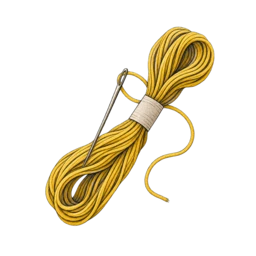
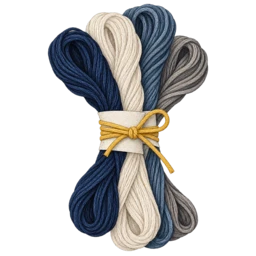
A fine or standard sashiko thread can suit a closely woven fabric when the needle passes through without forcing a large hole. A thicker thread gives a bolder line, but the fabric must be able to accept it without becoming stiff or distorted.
Kogin is a different material decision. Its counted patterns rely on a regular open weave, and its purpose-made thread and needle are generally heavier than fine sashiko materials. Do not substitute an open Kogin cloth for a stable sashiko sampler without checking how the pattern is meant to be worked.
Choose between pre-printed and plain cloth
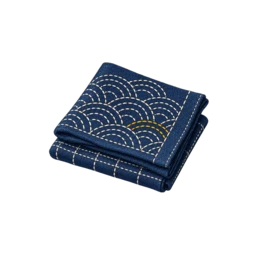
Pre-printed cloth removes the pattern-transfer step and lets a beginner concentrate on needle handling, spacing and tension. It is a good choice when you want a manageable first project or a small finished item.
Plain cloth gives more control over scale, placement and repair. It also means you need a marking method that suits the fibre and can be removed safely. Keep the packaging or marker instructions until the project is complete.
Test a small area before committing
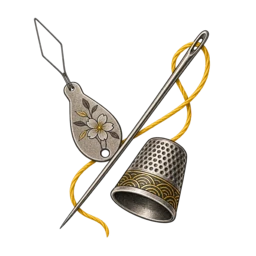
Make a short sample with the actual thread and needle before drawing a large design. Check whether the fabric puckers, whether the thread frays at the eye and whether the pattern remains visible from the front and back.
If the cloth feels too loose, too stretchy or too thick for the planned materials, change the pairing early. A compatible simple cloth is more useful than an impressive fabric that makes every stitch difficult.