
Understand the cloth
Tenugui is often lightweight cotton with unfinished or narrow edges and a printed surface. Inspect how open the weave is and whether the print competes with your transferred pattern.
A simple pattern and fine or moderate thread can keep the cloth from becoming crowded. Dense stitching may pull the light weave out of shape.
Use layers intentionally
For a bag, patch or decorative panel, a backing can give the cloth enough support for repeated stitches. Baste the layers so they move together before marking.
Avoid adding a backing merely to hide a problem. Test the final stack for thickness, drape and the way it will be washed or folded.
Respect the existing print
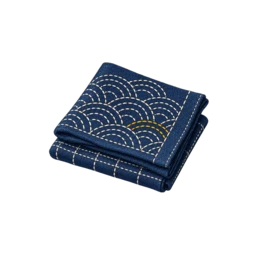
Let a printed tenugui remain part of the design when the motifs are compatible. Place sashiko lines in open areas or use a thread shade that gives the two surfaces a clear relationship.
Wash a sample before cutting a valuable cloth. Print, shrinkage and edge behaviour can change the balance of a small project.