Use it for a genuine mismatch
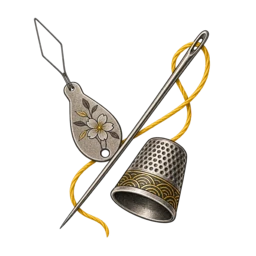
If the thread fits the eye but cannot be guided through easily, a threader can create a temporary path without crushing the strand. It is especially useful when changing colours repeatedly.
Do not use a threader to force an eye that is plainly too small. The wire can bend or break and the needle may still damage the thread during stitching.
Protect the thread end
Insert the threader through the eye, place the prepared thread inside the loop and draw it back slowly. Pull in line with the eye rather than twisting the wire sideways.
If the cut end is fluffy, trim it first. A tidy end passes more reliably and reduces the chance that the threader catches individual fibres.
Know when to change tools
A threader helps with threading but cannot correct a rough eye, unsuitable needle or thread that is too thick. Treat repeated breakage as a compatibility problem, not only a threading problem.
Store the threader with the needles in a small case. A fine wire can be bent by loose scissors or buried in the bottom of a project pouch.