
Map one complete unit
Trace a single interlocking unit and identify where its lines meet the neighbouring units. Mark the centre and boundary of the repeat so the pattern can be extended without gradually changing scale.
If the design is printed, inspect the crossings before stitching. Some lines may be guides for a repeat rather than places where the needle must stop.
Keep crossings light and readable
Use a relaxed thread at each crossing and avoid stacking extra stitches directly on top of one another. A bulky intersection can make the circles look broken and create a hard spot in the cloth.
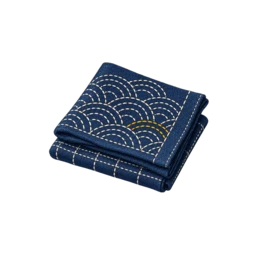
Work a short section, smooth the fabric and check the pattern from a normal distance. The interlocking effect should remain visible without every crossing needing to be identical.
Use scale to choose the project
A small shippo-tsunagi repeat can suit a sampler or patch, while a larger repeat gives the curves more room on a household cloth or garment panel. Match the thread weight to the open space.
If the cloth is intended for repair, leave a comfortable margin around the worn area. The pattern should reinforce the fabric rather than turn the edge into a rigid border.