
Set the rhythm with a sample
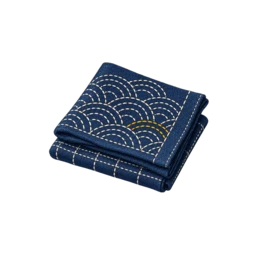
Use the actual thread and fabric to stitch a short row. Compare the visible line, the amount of cloth between stitches and the way the thread sits after it has been drawn through.
A shorter stitch can suit a small pattern or fine cloth, while a longer stitch may read more clearly across a broad motif. Let the design scale and thread weight guide the choice.
Keep the gap consistent by feel
Look ahead to the next few marks rather than staring at only the stitch under the needle. Loading a small group can help the running motion become smooth, but stop and reset when the cloth begins to tighten.
Do not stretch the fabric to make a gap appear perfect. A relaxed, slightly varied line usually looks better than a rigid line that has drawn the weave together.
Correct the pattern, not every variation
Unpick when a stitch is so long, short or tight that it changes the design or distorts the cloth. Leave minor differences that are only visible when the piece is held close.
Photograph or turn the work at normal viewing distance. That is the scale at which the finished rhythm will usually be judged.