
Start with the finished object
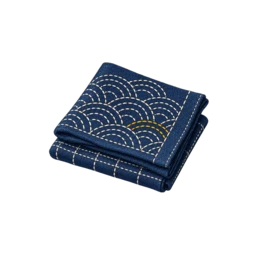
A small patch, coaster or pocket needs a pattern that can be read within a restricted area. A wide cloth or jacket panel can carry a larger repeat without forcing the motif into the seams.
Leave room for edges, handling and finishing. A design that reaches every boundary can make the object harder to fold, turn or wash.
Let thread weight set the visual density
Fine thread can keep a small geometric pattern open, while thick thread can make a large motif clear and bold. The same printed design may need a different pairing when the thread changes.
Make a sample with one repeat before transferring the full design. It is quicker to change the scale on paper than to remove a crowded field from cloth.
Check movement and washing
Dense stitching can make a soft garment feel rigid, especially across a bend or seam. Keep the pattern open enough for the object to move as it will be worn or used.
Consider the cleaning method too. A large simple repeat is easier to inspect and care for than a tiny dense pattern whose thread ends and marks are difficult to see.