
Mark the curve clearly
Use a line you can see without pressing hard on the cloth. A faint or broken curve encourages the needle to correct the shape by pulling the fabric instead of following the route.
Test the scale on a scrap. A small circle may need shorter stitches and a finer thread than a broad arc on a household cloth.
Shorten the stitch group as the curve tightens
Load fewer stitches around a tight bend and smooth the cloth after each group. The line should turn through small changes rather than making one sharp correction at the end.
Keep the spaces visually balanced. A tiny change in stitch length is less noticeable than a line that has been tightened into a polygon.
Check the circle from a distance
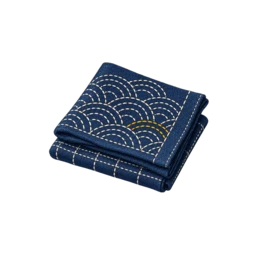
Hold the cloth flat and look at the complete shape, not only the section under the needle. The eye reads the curve as a whole and will forgive small hand-stitched variations if the outline remains smooth.
If the fabric is puckering, change the tension or material pairing before adding more stitches. A larger needle or heavier thread will not fix a curve that is being pulled too tightly.