Build the true stack
Include the patch, garment, lining, folded edges and any interfacing that will remain in the finished object. A needle chosen on one layer may fail at the overlap.
Hold the stack flat but do not compress it unnaturally. The needle must work through the same resistance your hands will meet during the repair.
Balance strength and hole size
A stronger needle may cross thick cloth more reliably, but an oversized shaft can leave visible holes or split a fine weave. Pair the needle with the thread and ground, not the layer count alone.
Make several stitches, then inspect the reverse. If the layers shift or the thread forms loops, use temporary basting or clips to stabilise the stack before changing everything else.
Slow down at transitions
Seams and patch edges are where bending and skipped stitches begin. Use a shorter needle or smaller hand movement if the long shaft cannot turn comfortably.
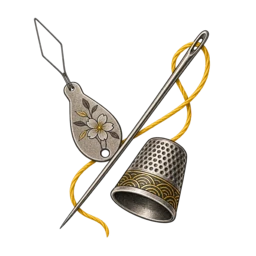
A thimble can reduce pressure, but it should not hide a dangerous amount of force. Stop and redesign the patch if the tool remains difficult to push safely.