
Compare the weave and hand
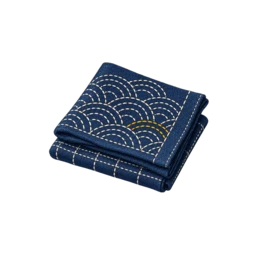
Sashiko cloth is selected for a stitchable, often sturdy surface that can carry repeated running stitches. Quilting cottons vary widely, from tightly woven lightweight prints to firmer fabrics with a different response under the needle.
Handle both fabrics and look at the reverse. A useful ground should accept the needle without excessive drag and should not stretch or open around every stitch.
Use quilting cotton for the right job
A stable quilting cotton can be excellent for learning a pattern, making a small decorative panel or testing colour. It may need a backing or different thread weight when used for a hard-wearing repair.
Do not judge the fabric only by how easy it is to stitch once. Flex, wash and inspect a swatch so you know whether the surface stays comfortable and the stitches remain supported.
Choose by finished use
A wall panel, pouch and worn jacket each ask different things of the cloth. Pick the textile that can handle the movement, washing and abrasion of the object rather than choosing by pattern alone.
Record the fabric composition and preparation with the finished sample. That note helps you understand why a project worked and makes a future material choice more precise.