Use a long needle for rhythm
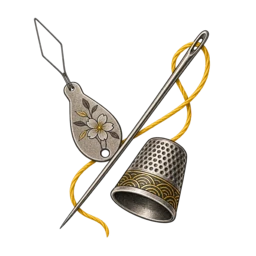
A longer shaft can hold more thread and support several running stitches in one motion. This suits open cloth, broad patterns and makers who like a steady rocking action.
The extra length is not automatically faster. If the needle catches the table, twists the layers or feels difficult to turn, a shorter option may produce more even work.
Use a short needle for control
Short needles are useful around seams, corners, small patches and areas where the cloth cannot be spread flat. They reduce the swing of the hand and make each pass easier to place.
They may require more frequent reloading, so keep the working length manageable and secure joins neatly rather than forcing an overlong thread through a tight space.
Choose by the actual project
Test both lengths on the thickest and most open parts of the cloth. The better needle passes cleanly, holds the thread without crowding the eye and lets you keep a relaxed grip.
Many makers keep both in the same kit. Switching length for a border, patch edge or dense crossing is a practical adjustment, not a failure to choose one universal needle.