
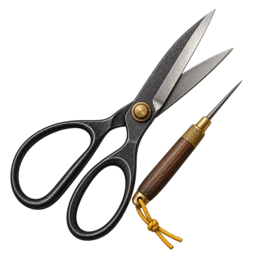
Clean before storing
Remove thread fibres, lint and adhesive residue from blades and moving parts. A dry, soft cloth is often enough for routine care; follow the tool maker’s guidance for anything else.
Keep metal tools dry and protected from moisture. Rust or a rough spot can damage cloth as well as reduce cutting quality.
Know when to retire a tool
A blade that catches, crushes thread or leaves uncut fibres is telling you that the tool needs attention. Move it away from fine work until it has been checked.
Store a retired tool separately and label it if it still has a safe general use. Protect the best fabric and thread by keeping unreliable tools out of the active kit.