
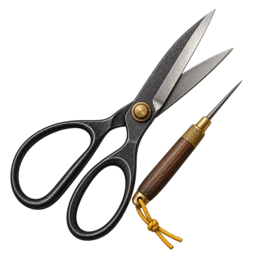
Match the blade to the cloth
Longer blades can make a clean continuous cut across a flat panel, while shorter blades give more control around a patch, curve or narrow seam allowance.
Test the scissors through the thickest cloth you expect to cut. The blades should close smoothly without forcing the fabric forward or leaving uncut fibres at the tip.
Prioritise hand comfort
A handle that fits your fingers reduces fatigue and helps keep the cut line steady. If the grip pinches or the tool feels front-heavy, a smaller pair may be more accurate in practice.
Cut on a stable surface and keep the cloth supported. A comfortable scissor cannot correct fabric that is hanging, stretched or moving under the blade.
Protect the edge
Reserve fabric scissors for cloth and thread. Paper, plastic packaging and adhesive residue can dull the edge or leave a drag that becomes visible on fine fabric.
Store the scissors closed and have them sharpened or serviced when the cut begins to crush the cloth. Do not compensate for a dull edge with repeated sawing.