Choose length by the project, not by the largest number
A short length is practical for a small sampler, a single colour accent or a project where you want to test the thread first. A longer skein is useful for larger cloths, repeated rows and designs where changing colour or joining often would interrupt the rhythm.
Length does not automatically tell you the thread weight. Check the product description for whether the thread is fine, standard, thick, variegated or intended for Kogin, then match it to the cloth and needle.
Cards and skeins behave differently in storage
A card is easy to label, cut from and keep with a small project. A skein offers more continuous thread but needs to be opened and managed carefully so it does not tangle.
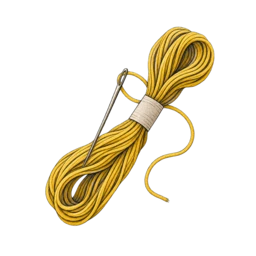
When opening a skein, keep the manufacturer’s label in place until you have secured the loop. Release one strand at a time from the prepared bundle instead of pulling from the middle and tightening the whole skein.
Consider colour changes as well as total length
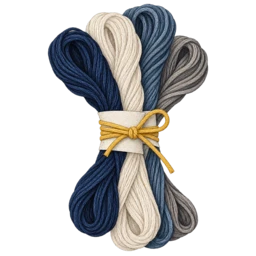
A solid colour gives a predictable line across a motif. Variegated or resisted thread changes the appearance as you stitch, so the visible rhythm depends on the length of each colour interval as well as the total amount of thread.
If the design needs a balanced colour placement, make a small sample before committing to a long repeated row. The same thread can look quiet on a small motif and much more directional across a large one.
Buy enough to finish, but keep a sample length
Use a short section to check the fabric, needle, tension and colour before opening the full project. If you are working a repeated pattern, keep the same thread available for the whole area where continuity matters.
Do not treat a manufacturer’s stated length as a guarantee of how far a project will go. Stitch size, fabric thickness, pattern density and the amount used at the ends all change the real consumption.