
Start with the count
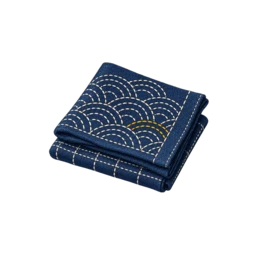
A thread that is comfortable on one Kogin cloth can look crowded or weak on another. Check how many fabric threads each stitch crosses and sample the smallest repeated unit.
The finished motif should read as a connected shape without burying the gaps that make the chart legible. Adjust the thread weight before changing the chart scale.
Watch twist and coverage
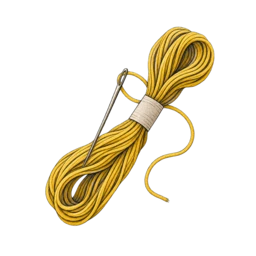
A smooth thread can make counted shapes crisp, while a softer or fuller thread gives a more tactile field. What matters is that the strand covers consistently when the stitch direction changes.
Run the needle through a few repeats and inspect the reverse. Uneven pull or a thread that separates easily can make the front look patchy even when the count is correct.
Plan colour in chart sections
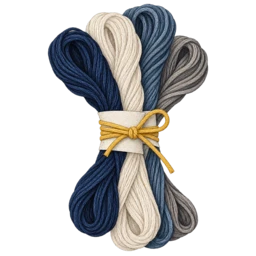
Kogin motifs often depend on blocks and mirrored rhythm. Use a contrasting thread for learning so missed counts are visible, then move to a quieter palette once the structure feels familiar.
Keep the exact thread information with the chart. A future extension or matching small piece will be much easier when the colour and weight are recorded.