
Choose repetition over complexity
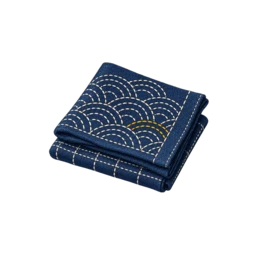
Straight rows, simple waves, diamonds and small repeating motifs make it easier to notice whether the needle, thread and fabric are working together. You get useful practice before the pattern becomes a test of concentration.
A pre-printed sampler can remove the transfer step. Plain cloth gives more freedom but adds decisions about scale, marking and placement.
Match the pattern to the cloth
Fine lines can disappear on a heavily textured cloth, while a bold thread can crowd a small pattern. Choose a pattern whose spaces can be seen clearly with the thread you actually plan to use.
If the cloth will become a patch or useful household item, leave enough unstitched margin for handling and finishing. A pattern that fills every edge can be difficult to turn or wash.
Make a sample before a large commitment
Stitch one repeat on a scrap or spare margin. Check whether the rhythm feels comfortable, whether corners remain flat and whether the reverse has unnecessary jumps.
Keep the sample with the thread label and the pattern name. It becomes a useful reference when you return to the project or choose another colour later.