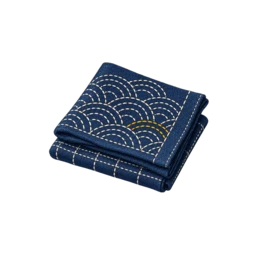
Compare the construction
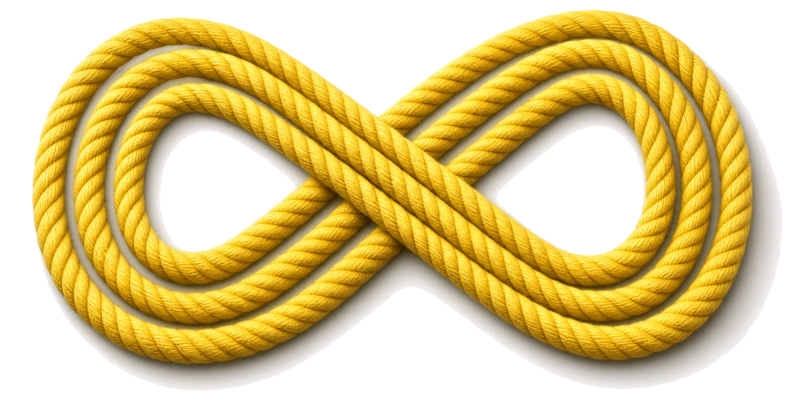
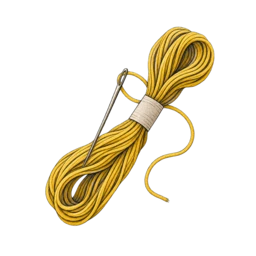
Traditional sashiko thread is commonly prepared as a thicker, softly twisted thread intended to sit clearly on the surface. Embroidery floss is usually divisible, so its final character depends on how many strands you use.
Neither option is automatically right or wrong. Match the thread to the scale of the pattern, the cloth weight and the amount of wear the finished item will receive.
Choose a practical substitute
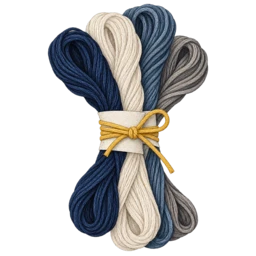
For a small patch, two or three strands of floss can give a manageable line. Test the bundle first because a loose strand count can create uneven coverage or separate as you stitch.
Purpose-made sashiko thread is usually the simpler choice for a broad traditional pattern, repeated running stitches or a project where consistent texture matters across a large area.
Make a swatch before committing
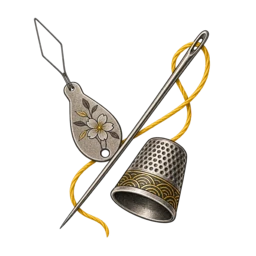
Stitch one repeat on the actual cloth and compare the front and reverse. Check whether the thread lies smoothly, forms the intended stitch length and leaves enough room in the needle eye.
If the floss feels wiry, splits or creates a noticeably different sheen, change the strand count or switch to sashiko thread before transferring the whole design.